Gaming & Consoles
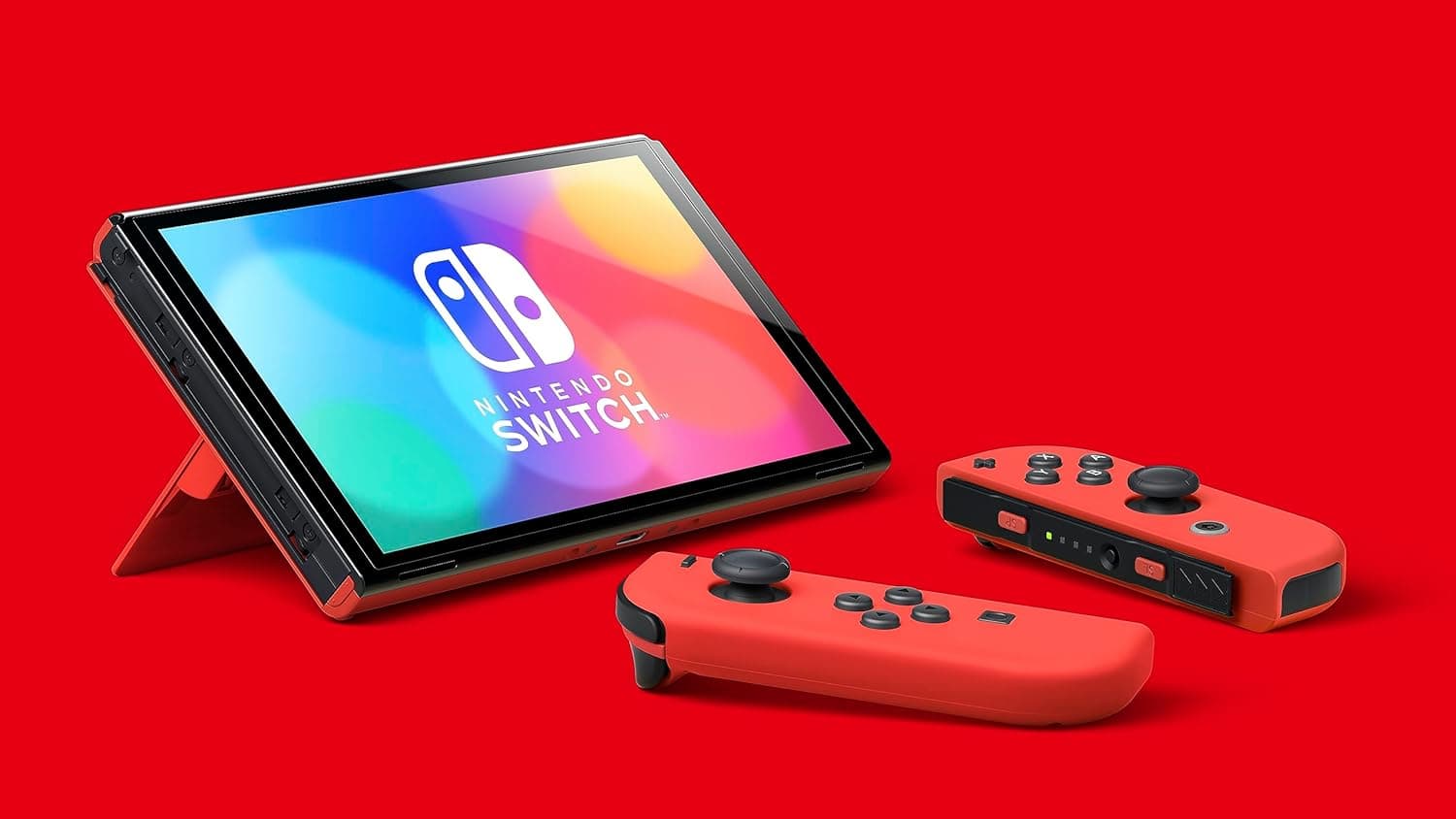
Nintendo Switch OLED Review: The Handheld Upgrade That Skips the Power Bump
- Brand:
- Nintendo
- Ages:
- 6+ years
- Updated:
- 2026-07-04
The verdict
The clear pick if you play mostly handheld or tabletop and want the best screen Nintendo offers on this hardware — skip it if you play almost exclusively docked, since the TV-output experience is unchanged from the base Switch.
Pros
- 7-inch OLED screen is a genuine, immediately visible upgrade in color and contrast over the original LCD Switch
- Wider, sturdier kickstand makes tabletop play actually practical, unlike the original's flimsy flip-out stand
- Improved built-in speakers noticeably clearer for handheld and tabletop audio
- Full access to Nintendo's first-party exclusive library, which remains the strongest reason to buy into the platform
Cons
- Same processor and RAM as the original Switch — no performance or resolution improvement in docked mode
- Third-party multiplatform games routinely run at lower resolution and framerate than PS5/Xbox versions
- Joy-Con analog stick drift remains a known long-term reliability issue across the Switch product line, OLED model included
This review is based on Nintendo's published OLED model specifications and the consistent pattern across owner feedback: strong, near-universal praise for the screen and kickstand, alongside repeated notes that docked performance is unchanged from the original Switch.
The screen is the reason to buy this over the base model
The jump from LCD to OLED is immediately obvious — richer colors, deeper blacks, and better contrast in handheld and tabletop modes specifically. It's a real, tangible upgrade for the roughly half of Switch owners who play primarily undocked, and irrelevant to anyone who plays almost entirely on a TV.
What didn't change
The OLED model uses the same internal chipset as the original Switch, so docked output resolution, load times, and third-party game performance are unchanged. Buyers expecting a performance upgrade alongside the screen upgrade are the most common source of disappointed reviews — it's a display and ergonomics refresh, not a hardware refresh.
The Joy-Con caveat worth knowing before you buy
Analog stick drift on the Joy-Con controllers has been a persistent, well-documented issue across the entire Switch lineup since the original model's launch, and the OLED version uses the same Joy-Con design. It doesn't affect every unit, but it's common enough that it's worth knowing about — and worth knowing Nintendo has repaired drift-affected Joy-Cons under specific programs in some regions.
Frequently asked
- Is the OLED model more powerful than the original Switch?
- No — it uses the same processor and RAM. The upgrades are the OLED screen, a wider kickstand, improved speakers, and more internal storage, not raw performance.
- Does the OLED model fix Joy-Con drift?
- No, it uses the same Joy-Con design as previous Switch models, and drift has been reported on OLED units as well as earlier ones. It's a known risk across the product line, not something the OLED refresh specifically addressed.
- Is it worth it over the Switch Lite?
- Yes, if you ever want to play on a TV — the Switch Lite is handheld-only and can't be docked. If you exclusively play on the go and never dock, the Lite is the cheaper, lighter option.
You might also like
Gaming & Consoles
Mario Kart World
Nintendo · Ages 7+ years
- First open-world Mario Kart entry — a free-roam mode connects tracks into one continuous explorable map, a genuine series first
- Launch title showcase for Switch 2's power, running smoothly at higher resolutions and frame rates than any prior Mario Kart
- At $79.99 it's priced above the traditional first-party Switch game standard, reflecting Nintendo's higher Switch 2 title pricing
Gaming & Consoles
The Legend of Zelda: Tears of the Kingdom
Nintendo · Ages 10+ years
- Ultrahand building mechanic turns the entire open world into a physics-based construction toy, layered on top of the same map from Breath of the Wild
- Sky islands and underground Depths effectively expand the explorable space well beyond its predecessor
- At $69.99, it carries the higher price point Nintendo introduced for its flagship first-party titles, above the traditional $59.99 standard
Gaming & Consoles
Stream Deck MK.2
Elgato · Ages 13+ years
- 15 customizable LCD keys give instant visual feedback for what each button does, unlike blind macro keys on keyboards
- Deep software integration with streaming tools like OBS and Twitch, Discord, and many games for one-touch actions and scene switching
- Its full value depends on streaming or heavy multitasking workflows — for a player who just wants to game, it's an expensive way to remap a handful of keys
Buy from Amazon