Books
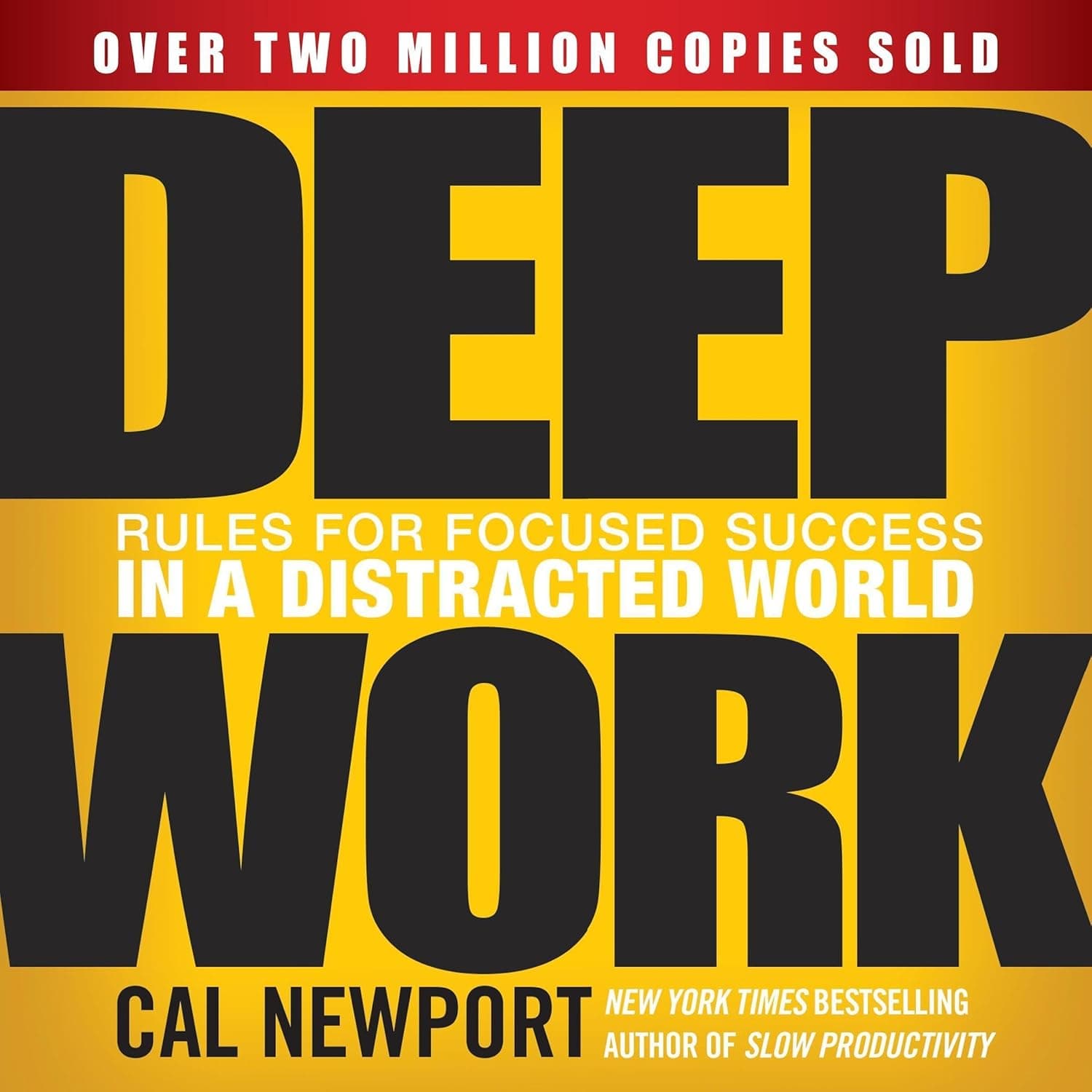
Deep Work Review: A Genuinely Useful Framework for Focus in a Distraction-Saturated World
- Brand:
- Cal Newport
- Ages:
- 16+ years
- Updated:
- 2026-07-13
The verdict
One of the most practically useful books on focus and productivity — the rules genuinely translate into implementable habits, though some suit academic or solo-work lifestyles more easily than highly collaborative jobs.
Pros
- Concrete, structured rules for building focus habits rather than vague encouragement to "concentrate more"
- Draws on real case studies of high-achieving professionals and academics rather than purely anecdotal advice
- Directly addresses the specific mechanisms (notifications, social media, open offices) that erode focus in modern work
- Practical enough that readers report implementing specific changes, not just reading passively
Cons
- Some of the author's own work examples reflect an academic lifestyle that's harder to directly replicate in many jobs
- Certain recommendations (extended device-free blocks) are genuinely difficult for readers in highly collaborative or client-facing roles
This review is based on the book's published content and the consistent pattern in reader feedback since its 2016 release: strong, repeated praise for actionability specifically, with acknowledgment that some recommendations are easier to apply in certain career types than others.
Concrete rules, not vague encouragement
The book's core value is structural — specific rules like scheduling deep work blocks and deliberately reducing shallow, reactive tasks — rather than simply telling readers to "focus better," which is the specific reason readers consistently cite it as more useful than typical productivity advice.
Who it's for
Best for knowledge workers and students who control a meaningful portion of their own schedule — readers in highly reactive, meeting-heavy, or client-facing roles may need to adapt some recommendations significantly.
Frequently asked
- Is this practical for someone with a busy, meeting-heavy job?
- Partially — some rules translate directly, but the book's deep, uninterrupted work blocks are genuinely harder to implement in highly reactive or client-facing roles, and readers in those positions typically need to adapt the framework rather than apply it exactly as written.
- How is this different from general productivity books?
- It focuses specifically on the mechanism of deep, undistracted focus rather than general time management or task organization, which is a narrower but more actionable scope than many broader productivity books.
You might also like
Books
Essentialism: The Disciplined Pursuit of Less
Greg McKeown · Ages 13+ years
- A genuinely useful mental permission-slip for chronic over-committers to cut obligations down to what actually matters
- Clear, actionable exercises like the '90 percent rule' and the essentialist-versus-nonessentialist framing, rather than pure abstraction
- The core message — do less, but better — is straightforward enough that it could be conveyed in an essay, and the book stretches it across many short chapters with some repetition
Books
Start with Why: How Great Leaders Inspire Everyone to Take Action
Simon Sinek · Ages 13+ years
- The 'Golden Circle' (Why, How, What) is a simple, memorable framework that's easy to explain to a team or apply to your own messaging
- Strong, well-known case studies (Apple, the Wright Brothers, Martin Luther King Jr.) make the abstract idea concrete
- Critics, including sales trainers, argue the framework oversimplifies — knowing your audience often matters as much or more than leading with 'why'
Books
Daring Greatly: How the Courage to Be Vulnerable Transforms the Way We Live, Love, Parent, and Lead
Brené Brown · Ages 13+ years
- Based on over a decade of the author's own qualitative shame and vulnerability research, not just personal opinion
- Genuinely reframes vulnerability as strength in a way many readers find personally impactful
- Some readers and critics find the tone can tip into repetitive affirmation rather than deeper analysis
Buy from Amazon